

Noise barriers of every type
Concrete elements, timber cassettes, aluminium cassettes with absorber infill and glass elements out of steel posts. Lifted out from the top down, element by element, so the barrier cannot tip unplanned.
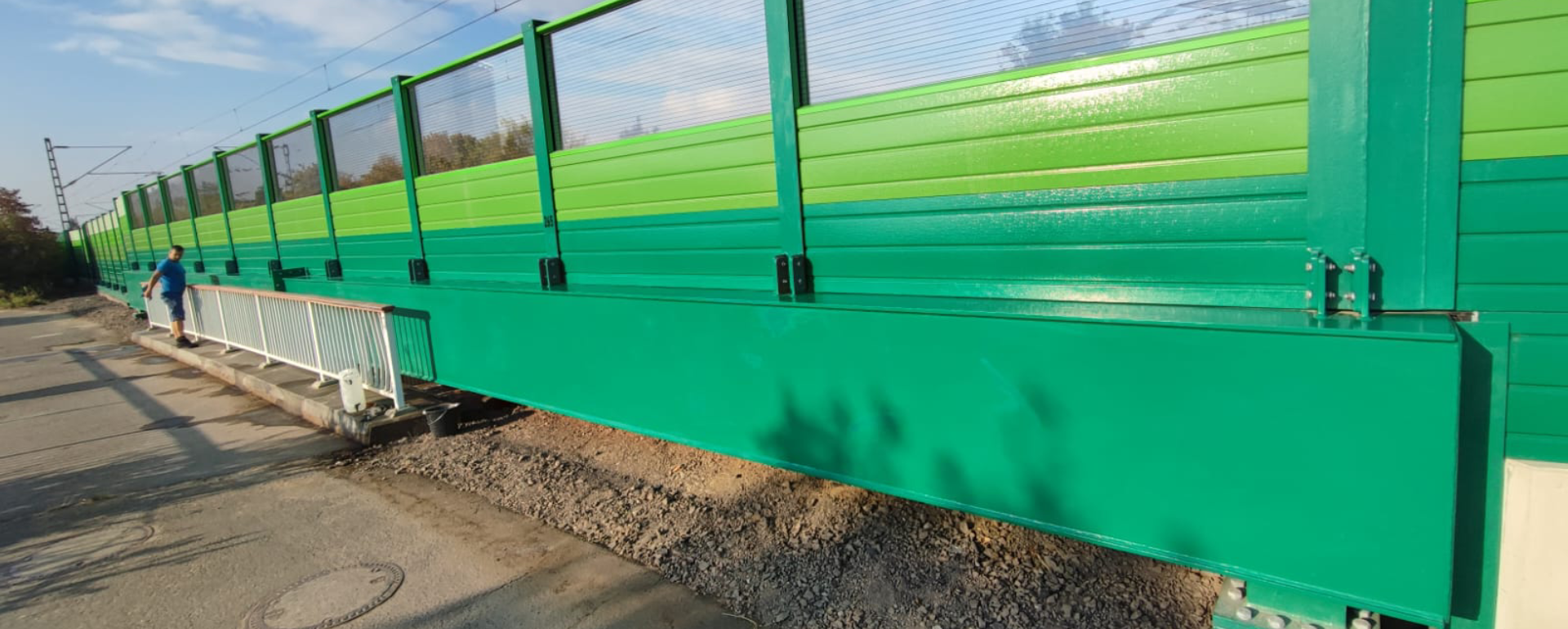
A noise barrier does not get demolished, it gets taken apart. The elements are often reusable or have to be separated by material, the posts sit in foundations that are meant to be reused, and traffic keeps running alongside. Driving an excavator into it is rarely the right answer.
We undo bolted connections, lift elements out, cut seized fixings and stack by material. Where new units go onto the same foundation, we work so that it is still usable afterwards. Most of the time we are the ones who then install the new barrier.
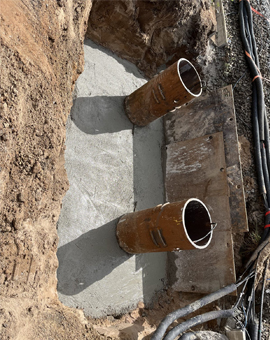
Concrete elements, timber cassettes, aluminium cassettes with absorber infill and glass elements out of steel posts. Lifted out from the top down, element by element, so the barrier cannot tip unplanned.
Posts pulled out of sockets or released at the base plate. Foundations stay in place where new units are coming, or get exposed and prepared for demolition.
Retaining units, wall panels, plinths and cover slabs from the existing structure. Lifting points checked, anchoring released, units lifted out and stacked.
Frames, brackets, railings, grating and support structures. Bolted connections released, and where nothing moves any more it gets cut without damaging the substrate.
Earthing straps and connections properly disconnected and documented, so it is clear during the rebuild what ran where. Inside the rail corridor to the client specification.
With a mobile excavator and certified operator we expose foundations, open head holes and, after the removal, backfill and compact again.
A connection that has stood in road salt for two decades does not undo. Rust has made thread and nut into one piece. Force it and the base plate or the anchor head comes out of the concrete, and with that the foundation is gone, the one that was meant to be reused.
So here it gets released first, then heated or treated with penetrating oil, and only when neither works does it get cut. It gets cut where the damage is smallest, not where the cutting disc reaches fastest.
A barrier is stable as long as it is complete. As soon as elements are missing at the top while others still sit below, that changes. Start in the middle and a post can lose its restraint, and that happens next to a running lane.
We therefore strip out in a set sequence, brace posts temporarily where needed, and set section lengths so that a stable state is reached at the end of every shift. Including when the closure lifts at five in the morning.
Absorber cassettes consist of sheet metal and mineral wool, concrete elements can contain reinforcement and fittings, timber cassettes are treated. Throw it all on one pile and the disposal is charged at the rate of the most expensive fraction.
So we separate by material as we strip out and stack so that collection works without re-sorting. Skips, haulage and the disposal documentation are usually arranged by the client, because the records for the project sit with them. On request we coordinate directly with the waste contractor.
Type, height, length, condition of the connections and the question of whether the foundations are to stay. Photos are often enough; for longer sections we drive out first.
Price per linear metre or unit, the number of installation days and the strip out sequence with the sections being worked. Within 24 hours.
Release, lift out, cut, sort, stack. Where work happens in the traffic area or in possessions, timed so a stable state stands at the end of the shift.
Area cleared, material stacked by type, foundations documented where new units go on top. Photo documentation included.
Often yes, and that is exactly why it gets dismantled cleanly rather than demolished. We release the posts so that socket and anchor head stay undamaged, and survey the foundations before new units go on. Whether they carry the new barrier is for the structural engineer to decide, not us.
We separate by material and stack for collection. Skips, haulage and disposal documentation normally run through the client, because the records for the project have to sit with them. If you want that included, we arrange it through our partners and price it separately.
To the traffic management order the client provides, usually behind barriers or in a night closure. We set section lengths and crew size so that no half dismantled section is left standing when the closure lifts.
It gets separated from the sheet metal during the strip out and captured separately, because it is disposed of differently from metal. How it is classified depends on age and material, which the client settles with the waste contractor. We supply the quantities for that.
That is the normal case and the simpler route for the programme. The same crew strips out and installs the new work, there is no interface between two companies and no argument about who damaged the foundation.
With a free calendar, within a few days. For planned construction phases allow two to four weeks, more in the main season. A date can be moved, a committed crew cannot be split.
Most sites need more than one of these. One crew then covers both, with no interface between two companies.
Free-standing panels with absorber cassettes for sites, generators and event grounds. Erection, relocation and dismantling by one crew.
Retaining units, wall panels, columns and plinths: lifted straight off the low loader, placed, levelled and anchored.
Posts, brackets, base plates, railings and signal masts, bolted onto anchor channels or post-installed anchors.
All twelve installation services on one page, from post setting to material transport.