

Mobile noise protection for sites and plant
Free-standing panels with absorber cassettes for sites, generators and event grounds. Erection, relocation and dismantling by one crew.
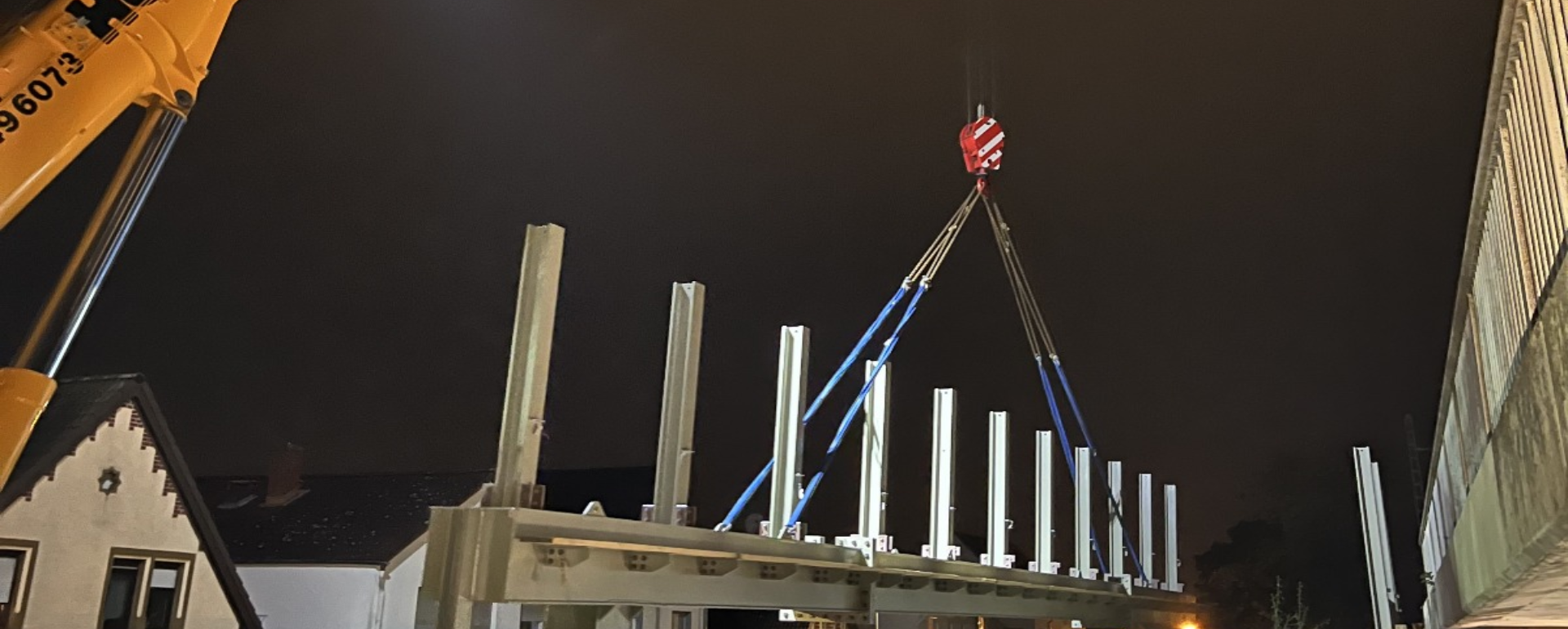
We take on the complete installation of a component, not individual steps. That means receiving and checking material, setting out the drilling pattern, placing anchors, lifting the unit, aligning it, bolting it, documenting the torque and handing the site over clean.
Request installation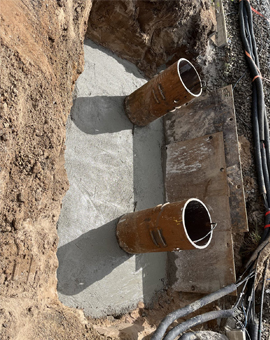
These four are the services clients most often enquire about on their own. Each has its own page covering the sequence, the technical detail and the questions that always come up.
Free-standing panels with absorber cassettes for sites, generators and event grounds. Erection, relocation and dismantling by one crew.
Retaining units, wall panels, columns and plinths: lifted straight off the low loader, placed, levelled and anchored.
Posts, brackets, base plates, railings and signal masts, bolted onto anchor channels or post-installed anchors.
Old barriers, precast units and steel structures taken apart, separated by material and stacked for collection.
Setting plinth blocks, placing posts, stacking concrete elements, closing the joints. We work on federal roads, motorway sections and inside the rail corridor, including short possessions with a fixed quantity per night.
Timber cassettes, aluminium cassettes with absorber infill and glass elements in steel posts. Delicate surfaces get moved and lifted with clamps and vacuum lifters so no scratches end up in the handover.
Standard and special posts in sockets, on base plates or in bored piles. Spacing, plumb and level are set with a rotating laser and levelling gear, then rechecked post by post.
L-shaped retaining units, wall panels, columns, cover slabs, chamber sections and plinths. We lift straight off the low loader, bed onto mortar or sliding bearings, level and anchor to the installation drawing.
Brackets, fixings, base plates, frames, grating, railings and signal masts. Bolted onto anchor channels, anchor cages or post-installed anchors, packed out with shim plates where needed.
Bonded anchors, injection anchors, heavy-duty anchors, through-fixing and anchor channels. Core or hammer drilling, hole cleaning, resin injection, curing, then torquing with a calibrated wrench.
On request we document every connection with position, anchor type, drilling depth and applied torque, plus progress photographs and a set of measured quantities that goes straight into the invoice.
Earthing straps, earthing connections and equipotential bonding on posts and wall elements, bolted and crimped to specification, particularly inside the rail corridor.
We take apart old noise barriers, precast units and steel structures, separate the materials and stack them for collection. Seized connections get cut without damaging the foundation underneath.
With a mobile excavator and certified operator we expose existing foundations, open head holes and hand dig around services. Afterwards we backfill and compact.
Mobile acoustic screening for construction sites, generators and event areas: free-standing panels with absorber infill, coupled together, secured against wind, then dismantled and taken away once the job ends.
Posts, cassettes, anchors and small plant arrive on our own 7.5 tonne truck with tail lift. Replacement material reaches site the same day, without a haulier and without waiting.
Not every noise source needs a permanent wall. For construction sites in residential areas, running generators, bench saws, demolition works or event grounds we install mobile noise protection systems: steel frames with absorber cassettes, standing on concrete feet or fence bases, coupled together and secured against wind load.
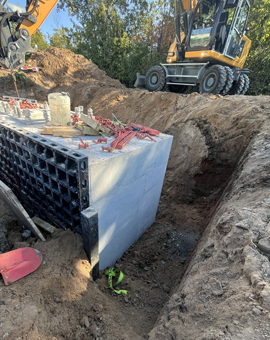
There are four steps from the first call to handover. Each one ends with something in writing, so nobody has to reconstruct later what was agreed.
You send the installation drawing, parts list and delivery date. We tell you what will cause trouble during installation before the material is produced. If needed we drive out first and survey the existing foundation.
You receive a fixed price per unit or linear metre, the crew size, the number of installation days and the list of works not included. Within 24 hours of your enquiry.
The crew arrives with tools, anchor material and survey gear. We work to the drawing, check plumb and alignment continuously and send evening progress photos on longer contracts.
A joint walk round, measured quantities, photo documentation and the torque record on request. The site is handed over swept clean and free of leftover material.
That is the normal case. Before installation starts we survey the existing foundation, check spacing, levels and the position of anchor channels, and report any deviation in writing before the first unit is lifted. Then we install on it.
Yes. Night and weekend work in possessions is part of our routine, as is installing behind a mobile safety barrier on the motorway. Traffic management is usually provided by the client; we size the crew and the quantity per shift to fit the window.
Deliberately not. We keep our own 7.5 tonne truck, small plant, lifting gear and survey equipment. Mobile excavators and cranes come in by the day through our partner firms with a certified operator, exactly for the days they are needed. In a quote that is cheaper than a machine standing idle the rest of the time.
Usually bonded or injection anchors approved for the particular substrate, and heavy-duty anchors where required. Drilling depth, hole cleaning and curing time follow the manufacturer approval, not the construction programme. If the structural design specifies a particular system, we work with that system.
For short works with a free calendar, within a few days. For planned construction phases book us two to four weeks ahead, particularly in the main season. Call early rather than late: a date can be moved, a committed crew cannot be split.
Yes. Sites around Celle, Hanover and Braunschweig we reach daily. For contracts of roughly a week or longer the crew moves to the site with accommodation, which makes us available across Germany.
On request, yes. We record position, anchor type, drilling depth and applied torque for each connection and add progress photographs. It is named in the quote rather than charged as an extra afterwards.
Yes, dismantling is the same work in reverse. We free seized connections, cut where necessary, take the elements down, separate the materials and stack them for collection. The foundation stays usable if new units are to be installed on it.